
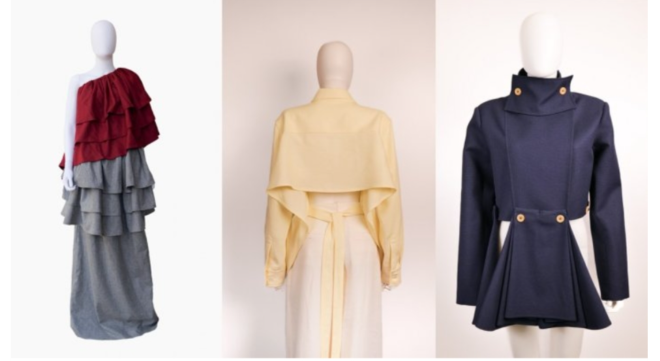
be@t-ing Fossil Dependence
At
Première Vision in Paris (February 3–5, 2026), CITEVE - the Portuguese
technological centre - unveiled the results of be@t, a large-scale
applied research project that shows how bio-based materials, circular processes
and digital tools are now entering real industrial production. This was not a
laboratory showcase. Every garment on display was manufactured in Portugal and
developed with more than ten industrial partners across spinning, weaving,
finishing and garment making.
The
message was clear: the transition away from fossil-based textiles is no longer
theoretical. It is operational.
The
silhouettes presented in Paris were built from the ground up using circular
economy principles. Sustainability was not added at the end. It was embedded at
the design stage. Material selection, process optimisation and end-of-life
strategy were integrated into product development from day one.
The
material palette was equally decisive. Linen, hemp and cork sat alongside
viscose, lyocell and PLA. Pine-based components were incorporated. Recycled
fibres were widely used. Cotton was blended with bio-residues such as grape
pomace and spent brewery grain. Across the 12 designs, the dominant share of
fibre content was bio-based or recycled. Compositions ranged from linen blended
with recycled wool to 100% organic cotton, lyocell, and hybrid structures
combining PLA or recycled polyester with cellulosic fibres. All 12 looks
achieved environmental and circularity indices above 70%.
These
prototypes demonstrate that bioeconomy strategies can be integrated into
existing manufacturing systems without dismantling industrial infrastructure.
They reduce dependence on fossil-derived inputs while maintaining scalability.
Equally
significant was the digital backbone. Each silhouette was equipped with a
Digital Product Passport, enabling full traceability from raw material origin
to environmental performance indicators. This directly addresses growing brand
and consumer demands for transparency and positions Portuguese manufacturers
ahead of upcoming European regulatory requirements on sustainability and
traceability.
The
industrial depth behind the project is substantial. Around 20 companies across
the textile and apparel value chain collaborated on the pieces shown in Paris.
The broader be@t initiative brings together 60 entities, including SMEs, large
enterprises, universities, R&D centres and consultancies, all coordinated
by CITEVE. It highlights the strength of Portugal’s vertically integrated,
agile and innovation-driven textile ecosystem.
Supported
by Portugal’s Recovery and Resilience Plan and the European Union’s
NextGenerationEU programme, be@t is designed to accelerate the sector’s shift
toward circular, bio-based and digitally enabled models.
In
Paris, Portugal did more than talk about sustainability. It demonstrated that
circular textiles can be industrial, traceable and ready for market.
The industrial depth behind the project is substantial. Around 20 companies across the textile and apparel value chain collaborated on the pieces shown in Paris. The broader be@t initiative brings together 60 entities, including SMEs, large enterprises, universities, R&D centres and consultancies, all coordinated by CITEVE. It highlights the strength of Portugal’s vertically integrated, agile and innovation-driven textile ecosystem. Supported by Portugal’s Recovery and Resilience Plan and the European Union’s NextGenerationEU programme, be@t is designed to accelerate the sector’s shift toward circular, bio-based and digitally enabled models.
Subscribe To Textile Excellence Print Edition
If you wish to Subscribe to Textile Excellence Print Edition, kindly fill in the below form and we shall get back to you with details.
Newsletter
Subscribe To Textile Excellence Mailing List


- December 09, 2022
'There Is Very High Acceptance For India

- December 09, 2022
'Advanced Machines & Service, Customer C
- October 09, 2023
First-time In The World: Rieter’s Auto

- July 28, 2026
Arvind Eyes Leadership In India's Premiu

- June 01, 2020
Karl Mayer Enables Automated Production
- June 05, 2023
Ultimax - All New Revolutionary Rapier W
- June 09, 2025
DyStar Becomes A Wholly Owned Subsidiary

- July 28, 2026