
Can We Destroy PFAS Without Creating A New Crisis?
Key
Points
•
Per- and polyfluoroalkyl substances (PFAS) are persistent, man-made chemicals
that do not break down naturally.
• Destruction technologies report efficiencies above 99.99%, but that figure
does not always capture airborne byproducts.
• Researchers are developing advanced methods to detect and control emissions
formed during high-temperature treatment.
Eliminating
PFAS is one of the defining environmental challenges of our time. More than
15,000 of these synthetic chemicals are in circulation. They persist in soil,
contaminate rivers, and accumulate in the human body. At elevated levels, they
are associated with serious health impacts in people, animals, and ecosystems.
Their cleanup has become a global priority.
The
primary destruction pathway is extreme heat. PFAS-contaminated materials are
treated in hazardous waste incinerators or through thermal desorption, where
contaminants are vaporised and soil matrices can often be reused. The objective
is clear: break the carbon–fluorine bond, one of the strongest bonds in
chemistry.
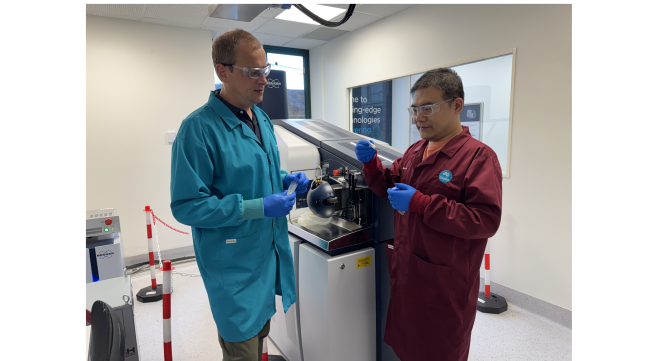
Dr
Jens Blotevogel, Principal Research Scientist at CSIRO, explains that this bond
strength is precisely why PFAS persist for decades. When PFAS-impacted
materials are placed in a kiln, the goal is to convert them into relatively
simple end products such as carbon dioxide and fluorine compounds. But the
chemistry is not linear. PFAS begin decomposing between roughly 200°C and
700°C. As temperatures rise, they enter the gas phase and generate dozens,
sometimes hundreds, of intermediate compounds. Many are short-lived. Some are
more stable and require temperatures approaching or exceeding 1000°C for full
breakdown. If these intermediates escape untreated, they can travel long
distances, and some function as potent greenhouse gases.
Modern
systems are designed to prevent that outcome. Off-gases pass through secondary
combustion zones and then into scrubbers, where water and alkaline reagents
capture acid gases such as hydrogen fluoride. The intention is that only
cleaned exhaust, largely steam and treated gases, leaves the stack.
Even
so, a technical gap remains. Facilities are regulated to achieve very high
destruction and removal efficiencies. Analytical tools for measuring PFAS in
solids and liquids are well established. Measuring what forms in the gas phase
during combustion is far more complex. That challenge has prompted
international collaboration.
Dr
Blotevogel and colleagues from Colorado School of Mines, North Carolina State
University, University of Notre Dame, the U.S. Environmental Protection Agency,
the U.S. Navy, the Helmholtz Centre for Environmental Research, and York
University are advancing analytical methods to track gaseous byproducts in real
time. Their work combines laboratory experimentation, emissions monitoring, and
modelling to determine precisely what is formed during treatment and how to
intercept harmful intermediates before release.
As
countries invest billions in remediation, destruction must be both effective
and verifiable. Removing PFAS from soil and water is only part of the equation.
Emissions control is equally critical to ensure risks are not shifted from land
to atmosphere.
PFAS
Destruction: Technical feasibility and system constraints
Technical
limits of “complete” destruction
Under
tightly controlled industrial conditions, many PFAS compounds can be
mineralised at temperatures typically between 1,000 and 1,200°C, depending on
compound structure and required residence time. Hazardous waste incinerators
are engineered to maintain stable high temperatures, adequate oxygen levels,
extended residence time, and secondary combustion. Acid gases formed during
breakdown are neutralised in scrubbing systems.
When
these parameters are carefully managed, destruction efficiencies exceeding
99.99% are achievable. However, PFAS comprise thousands of compounds with
differing stability. Incomplete combustion can generate shorter-chain PFAS or
other fluorinated byproducts. Continuous monitoring and strict operational
control are therefore essential. In practice, complete destruction is possible
only within rigorously designed and regulated systems.
Collection
and scale constraints
A
significant limitation lies upstream. PFAS are embedded in textiles, carpets,
upholstery, firefighting foams, food packaging, industrial sludge, and landfill
leachate. Diffuse contamination from washing, wastewater discharge, sludge
spreading, and landfill seepage cannot realistically be collected in full.
Thermal
treatment addresses concentrated waste streams, such as contaminated soils,
sludges, and legacy foam stockpiles. It does not resolve PFAS already widely
dispersed in the environment.
Residuals
and byproducts
During
high-temperature treatment, organic matter converts primarily to carbon dioxide
and water vapour. Fluorine atoms are largely transformed into hydrogen fluoride
gas, which must be captured through wet scrubbing. Residual ash remains and may
contain inorganic salts and trace metals. This material must be analysed and
disposed of in controlled hazardous waste facilities.
Destruction
reduces volume and changes chemical form, but it does not eliminate the need
for responsible residual management.
Occupational
and environmental controls
Operating
high-temperature destruction systems presents occupational and environmental
risks. These include dust exposure during handling of contaminated materials,
potential acid gas release if control systems fail, ultrafine particulate
formation, and standard industrial heat hazards.
Modern
facilities mitigate these risks using enclosed feed systems, negative-pressure
containment, continuous emissions monitoring, acid gas scrubbers, and
occupational exposure controls. The effectiveness of these measures depends on
regulatory standards, maintenance, and enforcement.
Water
use in emissions control
Water
is primarily used in scrubber systems to neutralise hydrogen fluoride generated
during combustion. Combined with alkaline reagents, the water converts acid
gases into stable fluoride salts. Advanced installations often operate
scrubbers in closed loops, recycling water and concentrating salts into
manageable waste streams.
Make-up
water is required, and effluent from scrubbing must be treated. However,
relative to many industrial processes, water demand is typically moderate. In
lifecycle terms, destroying concentrated PFAS waste can prevent far greater
long-term groundwater contamination than the water used during treatment.
Broader
context
High-temperature
destruction remains one of the few scalable technologies currently available.
It involves significant energy demand, capital investment, regulatory
oversight, and community acceptance. Emerging alternatives — including
supercritical water oxidation, plasma-based systems, electrochemical oxidation,
and mechanochemical processes — show promise but are not yet widely deployed at
global industrial scale.
PFAS
destruction is therefore not purely a chemical problem. It is a systems
challenge involving infrastructure, monitoring capability, governance,
lifecycle analysis, and upstream product design. Long-term mitigation depends
not only on effective destruction technologies but also on reducing
non-essential PFAS use, developing safer alternatives, and preventing
environmental release at source.
High-temperature destruction remains one of the few scalable technologies currently available. It involves significant energy demand, capital investment, regulatory oversight, and community acceptance. Emerging alternatives — including supercritical water oxidation, plasma-based systems, electrochemical oxidation, and mechanochemical processes — show promise but are not yet widely deployed at global industrial scale.
Subscribe To Textile Excellence Print Edition
If you wish to Subscribe to Textile Excellence Print Edition, kindly fill in the below form and we shall get back to you with details.
Newsletter
Subscribe To Textile Excellence Mailing List

- December 09, 2022
'There Is Very High Acceptance For India

- December 09, 2022
'Advanced Machines & Service, Customer C
- October 09, 2023
First-time In The World: Rieter’s Auto

- July 28, 2026
Arvind Eyes Leadership In India's Premiu

- June 01, 2020
Karl Mayer Enables Automated Production
- June 05, 2023
Ultimax - All New Revolutionary Rapier W
- June 09, 2025
DyStar Becomes A Wholly Owned Subsidiary

- July 28, 2026