
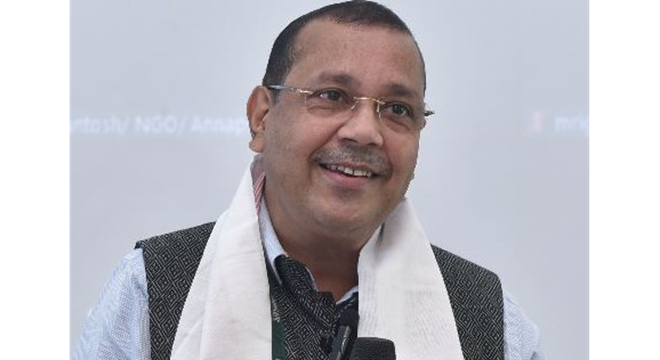
The Man Who Walks Into Villages Before Their Crafts Disappear
For decades, he has worked in places most people will never
see.
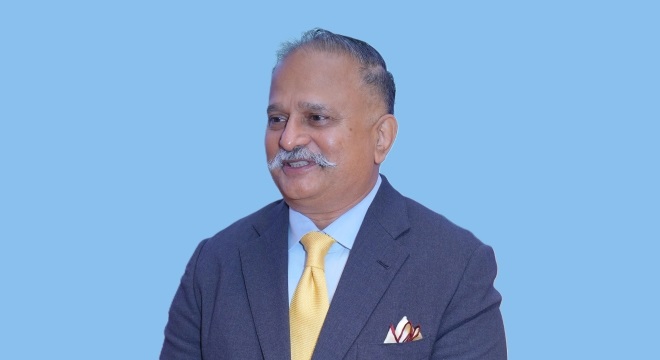
Dr Sukamal Deb comes from Assam, a region where language,
food, and weaving patterns change every few kilometres. Over the years, he has
worked directly with more than 26,000 villages in Assam, and across the
Northeast, the number rises to over 47,000. His work has taken him into
forests, islands, border settlements, and villages where most government
officials rarely travel.
Before entering academia, he served with the Government of
India as the regional head of the Khadi and Village Industries Commission
(KVIC) for the Northeast. That role gave him a close view of India’s craft
sector, not as a romantic idea, but as a fragile ecosystem dependent on people,
markets, and infrastructure.
Today, he leads the Anant Centre for Documentation and
Development of Crafts at Anant National University. But his work still begins
the same way it always has - by going to villages, meeting artisans, and
listening.
Forty crafts on the brink
Recently, he and his team identified forty languishing
crafts across the Northeast, spread across Assam, Tripura, Arunachal Pradesh,
Meghalaya, Mizoram, Manipur, Nagaland and Sikkim. Some of these crafts have
only a handful of practitioners left. Others survive only because elderly
artisans continue to practice them out of habit rather than income.
His dream is simple but ambitious. One day, he wants India’s
languishing crafts to be documented in a single book - an archive of
techniques, stories, and people - before they vanish.
The urgency is real. A British Council report in 2023
estimated that India has around 200 million craftsmen, and more than 56% of
them are women. In village after village, he has seen women weaving, spinning,
embroidering, or shaping clay, often while managing households and fields. Yet
the policy attention and market support given to them remain limited. “These
women are holding the craft sector together,” he often says. “But the systems
around them are not.”
Meeting the last potter of the Monpa community
In 2020, Dr Deb travelled to a remote village in Tawang
district of Arunachal Pradesh, near the border with China. The journey itself
took hours along winding mountain roads. The village had no visible signboards,
no markets, and very little infrastructure.
There he met Lham Tsering, a 65-year-old man who was
believed to be the last traditional potter of the Monpa community.
The Monpas are a Buddhist tribal group, known for their rich
cultural traditions. Yet their pottery had nearly disappeared. Young people had
moved away from the craft, and plastic utensils had replaced clay in daily
life.
He asked Tsering what could be done. The answer was
immediate: train the youth.
Within weeks, Dr. Deb organised a training program. Ten
young villagers, mostly women, gathered to learn pottery under Tsering’s
guidance. “We also brought in power-operated pottery wheels from Maharashtra and
Gujarat to make the process less physically demanding,” said Dr Deb.
For a while, the craft began to stir again. Pots were made.
Young women experimented with designs. There was a sense of revival.
But Dr Deb is honest when he speaks about that effort. “It
was not enough,” he says. “Officers get transferred. Projects end. Without
local leadership and sustained markets, many such initiatives fade.”
The deeper issue, he believes, is not training but
continuity. Villages need community leaders who take ownership long after
government teams leave.
Potters on an island that disappears each year
Another journey in 2018 took him to Majuli, the world’s
largest river island, located in the Brahmaputra. To reach one particular
village, Dr Deb travelled by car, then by two-wheeler, and finally walked the
remaining distance.
In the village, he met a group of elderly women - most
between 65 and 70 years old - who depended entirely on pottery for their
livelihood. They shaped clay with their hands using techniques passed down
through generations. Years of mixing clay had worn down their fingernails.
Training sessions were organised. Power-operated wheels were
introduced. Production improved. But the real problem soon became clear.
For nearly six months every year, floodwaters from the
Brahmaputra submerge the village. Families abandon their homes and move to
higher ground along the riverbanks. During that time, pottery stops, and they
switch to weaving to survive.
Even in the dry months, their biggest challenge is
transport. The market for their pots lies in Jorhat, across the river. The only
way to reach it is by small country boats that carry both people and fragile
clay goods through unpredictable currents.
“Unless the pots cross the river, they might as well not
exist,” he says. “That is what market access means in rural India.”
A bridge over the Brahmaputra is under construction and may
eventually transform their lives. Until then, the women continue to make pots
that are beautiful, fragile, and uncertain of ever reaching buyers.
Craft, poverty, and the limits of sympathy
He has seen many well-meaning campaigns that ask people to
“buy dying art to save it.” He believes such messaging is flawed. “Craft should
not be sold through sympathy,” he says. “It should be sold through aspiration.”
In his view, traditional crafts are not relics of the past
but potential luxury products. Their value lies in their story, their material,
and the time invested in them - qualities that fast fashion cannot replicate.
Learning from the Kalbeliya women
His work has also taken him beyond the Northeast. During a
workshop at Anant National University, artisans from the Kalbeliya community of
Rajasthan were invited to teach embroidery and beadwork, and the Kalbeliya
culture.
The Kalbeliyas are globally known for their dance form, but
their embroidery traditions are equally rich. The master artisan who came to
the university was a woman who had built her enterprise in a deeply
conservative environment where women’s financial independence was once
unthinkable.
She travelled with her entire family - husband, children,
daughter-in-law - all involved in the craft. Over conversations and
demonstrations, she shared stories of resistance, ridicule, and gradual
acceptance as her work began to bring income into the household.
For students, it was not just a workshop but a lesson in how
craft intersects with gender, dignity, and social change.
Saving music before it falls silent
Craft, for him, is not limited to textiles or pottery. It
includes instruments, performance traditions, and intangible cultural
knowledge.
One such tradition is Sufiana Mausiqi from Kashmir, a
classical music form that relies on a set of rare instruments, including the
santoor, sitar, and saaz-e-kashmir. At one point, only a few artisans knew how
to make these instruments. If they stopped, the tradition would collapse within
a generation.
Through the university, artisans were invited to campus to
build instruments. In one instance, eight santoors were crafted on site. The
idea was simple: let young designers witness the process and understand that
some knowledge can only be transmitted through hands, not screens.
In Kashmir, they tracked down a single surviving
saaz-e-kashmir instrument that had remained in one family for over 250 years.
Efforts are now underway to recreate it so that the sound and craftsmanship are
not lost.
When artisans teach across conflict lines
In January 2025, the university invited a black pottery
artisan from Manipur, a region affected by unrest. At the same time, students
from Kashmir were attending a winter school on campus.
For a few days, a Manipuri artisan (Ms Kamala) taught
Kashmiri students how to shape clay. In a country often divided by geography
and politics, the sight of young people from distant conflict zones sitting
together over wet clay felt quietly significant.
“Art is sometimes the strongest bridge we have,” he says.
Building markets where none exist
One of the recurring themes in his work is market linkage.
Without buyers, even the most skilled artisans eventually abandon their craft.
In 2022, in a Monpa village near the Indo-China border, he
noticed that traditional attire made from eri silk was being imported from
Bhutan and Tibet. Local artisans had stopped producing it, leading to money
flowing out of the community.
A weaving and garment unit was established in the village,
training young women to produce the fabric locally. Initially, the products
were sold only within the village. Demand was high because people preferred
their traditional clothing, but had no local source earlier.
The next challenge is scaling production and connecting
these textiles to mainland markets without diluting their identity.
The village that produces everything it needs
In Nagaland, he studied a village called Ntuma, Peren
district, known for its self-sufficient cotton ecosystem. The community grows
its own cotton, uses natural dyes, spins yarn, weaves fabric, and produces
finished textiles — all within the village.
For researchers and sustainability advocates, Ntuma
represents an almost complete circular economy. International scholars have
lived in the village to study its practices, sometimes contributing knowledge
about new dye plants and techniques.
He believes such villages should be positioned as global
examples of organic, slow, and ethical production. But this requires patience.
International buyers must be willing to spend time in these locations and
understand their rhythms, rather than expecting factory-style output.
“These are not fast-fashion products,” he says. “They are
luxury items in the truest sense.”
Stories woven into fabric
In Arunachal Pradesh, he encountered textiles whose designs
were not abstract patterns but encoded stories. One motif, consisting of
expanding circular ripples, was said to have originated from a young woman who
threw a pebble into a pond while thinking about her beloved and later
translated that image into a weaving pattern.
Another pattern was inspired by a dream in which a woman saw
her absent husband returning in the form of a snake, its scales forming
intricate shapes.
Such stories rarely appear in official documentation.
Without recording them, the motifs risk becoming decorative forms stripped of
their meaning.
Witnessing poverty behind celebrated crafts
Not all his memories are inspiring. Some are deeply
unsettling.
While researching the appliqué craft traditions of Odisha, Dr
Deb visited a village called Ghoradia. Despite being associated with a craft
known across India, the village was mired in extreme poverty. Artisans reported
earning only ₹300 to ₹400 a month.
There was no proper room large enough to hold a meeting.
Eventually, they gathered in a cramped space while women stood outside,
listening through two small windows. The village, he was told, had not had a
functioning school for decades.
For him, that visit changed how he viewed craft promotion.
Celebrating a craft in exhibitions and markets means little if the community
producing it continues to live in deprivation.
From government corridors to a design university
Dr Deb’s transition from a senior government role to a
university environment was not accidental. While working in the ministry, he
came across an advertisement for the Anant Fellowship for Climate Action and
applied. The interdisciplinary approach of the program appealed to him,
especially its emphasis on indigenous knowledge systems.
After completing the fellowship, he was invited to help
establish a dedicated centre for craft documentation and revival. He formally
joined the university in December 2023 and has since led multiple projects
across the Northeast, Kashmir, Rajasthan and other regions.
Anant University positions itself as India’s first “Design
X” university, where design is treated not as a narrow discipline but as a
multiplier across sectors - from climate to crafts to public systems. For him,
the environment offers something government service could not: continuity.
Why documentation cannot wait
Across his journeys, one concern remains constant - the
speed at which knowledge disappears. When a 70-year-old potter dies without an
apprentice, an entire lineage of technique and cultural memory disappears with
him.
Dr Deb is currently working to document the languishing
crafts of the Northeast in detail - processes, tools, stories, songs, and
rituals associated with them. The work is painstaking, but he sees no
alternative.
“If we do not record these now,” he says, “future
generations will only know that something existed. They will never know how it
was made, why it was made, how significant it was.”
A life shaped by villages
Despite holding academic and administrative positions, he
still introduces himself first as someone who works with villagers. The numbers
- 26,000 villages in Assam, 47,000 across the Northeast - are not statistics he
uses for impact reports. In these villages, the people whose homes he has
entered, whose meals he has shared, whose crafts he has watched take shape.
In many of those villages, development arrives slowly, if at
all. Roads wash away in floods. Young people migrate to cities. Plastic
replaces clay. Synthetic fabric replaces hand-spun yarn.
He does not claim that all crafts can be saved. Some may
already be beyond revival. But he believes that documenting them, supporting
those who still practice them, and creating dignified markets for their work is
a responsibility shared by government, academia, industry, and society.
“It is not just about preserving objects,” he says. “It is
about preserving ways of thinking, ways of living, and ways of relating to
nature and community.”
And so, he continues to travel - to islands that flood, to border villages, to communities whose names rarely appear on maps - carrying notebooks, recording devices, and a quiet determination to ensure that when these crafts are spoken about in the future, they are remembered not as footnotes, but as living traditions that once shaped everyday life.
From Conflict To Craft
Another part of his work has taken him into spaces few would
willingly enter.
In Assam, Dr Deb was involved in an effort to bring women
militants from underground factions back into the mainstream. It was delicate
work, carried out quietly, often inside designated camps under the watch of
security forces. There were conversations, long pauses, and a need for
patience. Trust did not come easily.
He often recalls a group of 26 women who had laid down arms.
They came from factions like DNLA, UPLA, and PDCK. For many of them, this was
their first step into a life beyond conflict. What could that transition look
like? For him, the answer lay in craft.
Through a government-led initiative, these women were
introduced to khadi weaving. The idea was simple - give them a skill, a
routine, and a source of income. But the process was anything but simple. He
remembers visiting the camps with senior officials from the Assam Police,
sitting with the women, listening more than speaking, trying to understand what
they had been through and what they were willing to hope for.
“It was very, very sensitive work,” he recalls.
Progress was slow, but it was real. The looms became more
than tools, they became a way to rebuild identity, to replace uncertainty with
something tangible. For him, this remains one of the most meaningful
interventions he has been part of.
In December 2022, he had to leave his position at KVIC
unexpectedly, and the work could not continue under his watch. It is something
he still thinks about.
Yet his belief has not changed. If the concerns of young
people are understood early, and addressed with care, he says, very few would
choose a path of conflict. The Northeast, in his view, is not a region of
scarcity but of possibilities - rich in resources, and richer still in its
people.
“Peace,” he says, “can be built through work, income, and
dignity.”
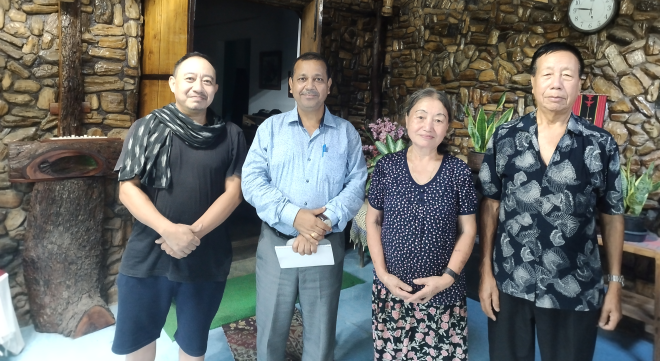
26 women militants TAGS Training.jpg - Dr Sukamal Deb motivating the surrendered women cadres on 17.10.2022 at a Training Centre, Tamulpur Anchalik Gramdan Sangh, KVIC, Tamulpur, Bodoland Territorial Region, Assam
Subscribe To Textile Excellence Print Edition
If you wish to Subscribe to Textile Excellence Print Edition, kindly fill in the below form and we shall get back to you with details.
Newsletter
Subscribe To Textile Excellence Mailing List

- December 09, 2022
'There Is Very High Acceptance For India

- December 09, 2022
'Advanced Machines & Service, Customer C
- October 09, 2023
First-time In The World: Rieter’s Auto

- July 28, 2026
Arvind Eyes Leadership In India's Premiu

- June 01, 2020
Karl Mayer Enables Automated Production

- June 05, 2023
Ultimax - All New Revolutionary Rapier W

- June 09, 2025
DyStar Becomes A Wholly Owned Subsidiary
- July 28, 2026