
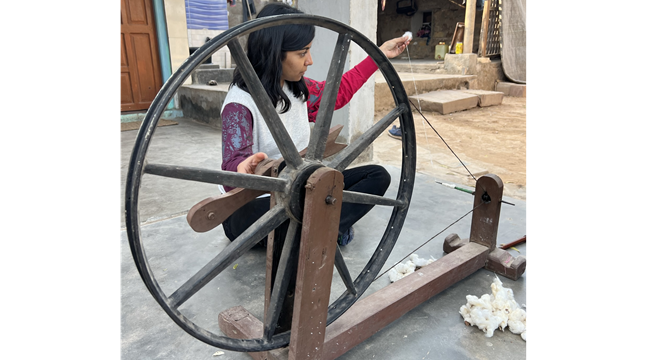
`Buying Less But Better Is The Future Of Fashion’
Built on the belief that fashion can be both desirable and responsible, Jiwya is pioneering a fully plant-based approach to apparel while working closely with India’s artisan communities. Founded by material science and textile professionals, the brand combines regenerative materials, traditional craftsmanship, and transparent production practices to address some of the industry's most pressing environmental and social challenges. In this interview, Aishwarya Lahariya, Co-Founder & Designer, Jiwya, discusses the inspiration behind Jiwya, the realities of creating a soil-to-soil supply chain, and why she believes plant-based fashion can move from a niche luxury proposition to an industry norm. Shubhangi Prasad You began your journey in deep-tech engineering and material science. What was the turning point that led you to build Jiwya and enter the world of fashion? It was pure frustration that something as simple as our clothing is one of the largest polluters on the planet and leads in the majority of animal and labour exploitation. No matter what major stride I would make in technical textiles, no matter how much individual level of change I could make, this voice in the mind wouldn’t stop; that I belong to an industry that causes more harm than good. This was the turning point to pivot my expertise and start finding solutions for the most nasty troublemaker in the field of textiles - fashion. Growing up in Vidarbha, a region shaped by environmental challenges, how did your early experiences influence your approach to sustainability today? It was pivotal to say the last. I grew up in a drought prone area. We used to get drinking water once every 10 days. Time and resources as a family would be dedicated to storage of water, judicious use and managing it better. It also brought the glaring divide of society in front of my eyes. As a kid I saw how people around me couldn’t access a basic resource as water equally. I would design experiments to save water, my mother would show us to save extra water and share it with those who couldn’t store it. So, I would say growing up in Vidharbha allowed me to understand that the world is unequal, that basic resources are scarcely divided and that lives can be changed with something as simple as sharing. These feelings stay with me to this day. I still believe every small act can make a difference, even when the going gets tough. Jiwya is positioned as the world’s first purely plant-based luxury fashion brand. What gap did you identify in the industry that made this category necessary? Jiwya is a result of few major statistics: The textile and fashion industry is the third largest global polluter and uses 5 billion animals yearly. At Jiwya, this became the material shift, that’s why we are built to be 100% plant based. Fashion is one of the worst industries when it comes to labour laws and regulations. At Jiwya, we are transparent in all our practices and majorly vertically integrated. Our production team are our full-time employees with benefits and dignified wage, not wage workers. Our art clusters across India (those who weave our fabrics), get 17-20% higher than market rate when weaving our yarns. Overconsumption and overproduction is at its peak. The consumers and industry together throw 92 million tonnes or 1 truckload of clothes and textiles every minute. These are majorly thrown by people who can afford endless purchases, not by ones who couldn’t buy more. The problem is the top tier-premium and luxury buyers resorting to fast fashion for throwaway looks. But these same buyers invest in quality pieces too. At Jiwya, each piece tells a story, to move this trend towards buying less but better and our Re:Jiwya program closes the loop. Cultural appropriation of Indian and textile arts from the Global South is rampant in the industry. Indian arts feature as trend moments that fast fashion channelises while appropriating an entire culture without credit. At Jiwya, we have personally traveled 19,000 kilometers across India and made personal relations with handloom weavers, block printers, hand embroiderers to work on our plant-based materials with us. We detail their art, pay fair, give the time for the art to flourish and take it to global stages for fair representation and value it deserves. Together these become the gap we are trying to solve - a material, art, human centric solution that takes a top down or trickle down approach. “Soil-to-soil” is a powerful idea but translating it into a fully functional supply chain is complex. What were the toughest barriers you faced in making this philosophy a reality? Many! When you are walking against the tide, it's mostly opening a door to find another one locked. As scientists, my cofounder and I were able to meet the material philosophy faster than anything else. Finding the right material, using the right process and technically sound production. The toughest in this realm was actually finding stitching thread that wasn’t polyester and then training our team to work with the speed of a non-polyester thread. In the journey across India, it was initially tough convincing art clusters to work with us and our plant-based materials to make fabrics, because they have been duped more than we can imagine. The toughest part was and still is bringing awareness towards the real value of arts and authentic materials that don’t harm. Your work sits at the intersection of science and craft. How do you balance technical precision with the unpredictability and heritage of artisanal processes? Technical precision is easier for us given our deep-seated expertise in chemistry and production. It is time consuming to ensure nano level of surety to use only plants at all stages. The art part is as unpredictable as human nature. It changes every time we interact with a different art cluster. However, we know each artisan - the weaver, the spinner, the embroiderer personally. We have spent time with them through our India travels, shared meals, and understood their art. We have a unique way of balancing their art cycles with our supply chain. This purely requires patience, understanding and due time required for an authentic art to flourish. I feel seeing these arts up close, you can only use them in an authentic way to do justice to each strand of effort. I honestly can’t imagine any other way of being and it shudders me when I see these arts exploited or appropriated, Why shouldn’t one choose empathy? Isn’t empathy what makes us human? Feeling what another person might be feeling? Like I said, it pains me when we leave this very human quality for unchecked gains that are only wrecking the only permanent home we all have - the Earth. I strongly feel its lack of empathy that is leading the world to societal and planetary collapse. At Jiwya, it was a very natural thing for us to simply understand where each artisan comes from, which seasons they can weave, when they can spin yarns, what months don't hamper with their farming cycles. A little pre-planning and it allows them and us to grow together. I don’t want to call this strategy, it's basic human understanding honestly. As a second-time founder, how did your experience with BioFluff shape your approach to building Jiwya differently? BioFluff was purely B2B. There I learnt a lot of strategies to build a startup but I also identified a critical gap - designers aren’t asking where the material comes from or where it ends up. This gap led us to making Jiwya D2C, I stepped in as a designer for the brand and we are now solving that end of mile question as well. Jiwya has already been showcased at global platforms like Paris Fashion Week and London Fashion Week. What did these moments validate for you and what still remains to be proven? It definitely validates that global fashion is ready to go 100% plant-based. It also shows the extra support for regenerative material, transparent systems and authentic arts outside India than in India. However, there's a lot to be proven. We are still young as a brand, our market validation is still growing slow and steady. We want to be known as the benchmark and category creator to put plant-based as a norm in fashion. If plant-based fashion represents a healthier and more ethical alternative, should it remain a luxury, or do you believe it must eventually become the default for the mass market? What will it take to get there? It absolutely has to go mass (not at fast fashion prices, those are pure exploitation based). It will take the system to recognise its flaws and consumers to shift their mindset, both are happening slowly. Fashion always trickles down, what you see on ramps and runways gets adopted more often and the materials then get more demand to be subsidised. For natural materials to be a norm, governance plays a big role in taxes and subsidies. Currently synthetic materials get subsidies at par or more than natural fibres, this has to change. I can’t predict when it will happen across industry but I can predict it will happen sooner than later at Jiwya. We are constantly working to balance economies of scale, value for arts and access to regenerative materials at scale to ensure affordable and premium segments can be a reality. At Jiwya the goal has always been for the largest diversified impact across fashion. Beyond building a successful brand, what does giving back to your country mean to you in real, tangible terms? Jiwya has just started, we are further away from being successful, as of now. But we are already giving back and will continue to do so. It’s the very DNA of our foundation. Uplifting art clusters with fair and dignified wages, regular work and supply chains that work with their art. Working with farmers to preserve soil health while yielding crops that are healthy. Employing full time instead of hourly systems. Spreading awareness on slow consumption, better materials, zero-waste practices. Well being of our team. Educating artisans on ergonomics and health of their clusters. All grassroot changes that are already a part of Jiwya and will always be. You actively work on educating consumers about greenwashing and conscious choices. In your view, what is the biggest misconception people have about sustainable fashion today? There are two major misconceptions that need to go away: 1. Recycled polyester or nylon is sustainable. It is NOT. 2. Thrifting or buying second-hand solves the problem of overconsumption. It doesn’t. For fashion to change, consumers need to slow down, buy better quality, make it last and become part of the system of repair, reuse, then thrifting and then closing the loop with upcycling. For young women aspiring to enter the textile and fashion industry, not just as designers but as changemakers, what mindset shifts would you consider essential? Start sooner than later but always keep a cushion of funds handy. Especially for a rainy day. Take calculated risks. It's okay to fail, pivoting is more common than we know. No direction of making impact is lesser or better than other. Every life impacted makes a difference.
Empathy is often seen as a soft skill, but you treat it as a strategic tool. How has this influenced your decisions, especially while working with over 150 artisan clusters?
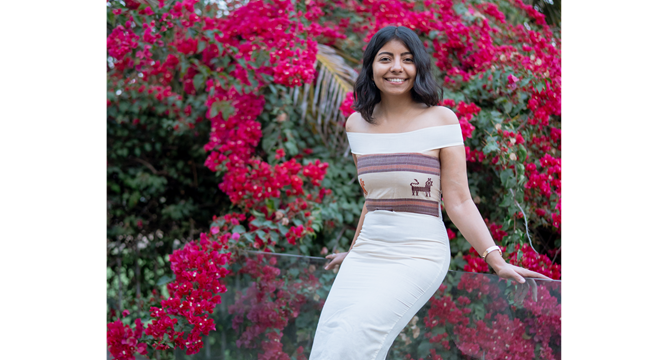
Jiwya has just started, we are further away from being successful, as of now. But we are already giving back and will continue to do so. It’s the very DNA of our foundation. Uplifting art clusters with fair and dignified wages, regular work and supply chains that work with their art. Working with farmers to preserve soil health while yielding crops that are healthy. Employing full time instead of hourly systems. Spreading awareness on slow consumption, better materials, zero-waste practices. Well being of our team. Educating artisans on ergonomics and health of their clusters. All grassroot changes that are already a part of Jiwya and will always be_Aishwarya Lahariya, Co-Founder & Designer, Jiwya
Subscribe To Textile Excellence Print Edition
If you wish to Subscribe to Textile Excellence Print Edition, kindly fill in the below form and we shall get back to you with details.
Newsletter
Subscribe To Textile Excellence Mailing List

- December 09, 2022
'There Is Very High Acceptance For India

- December 09, 2022
'Advanced Machines & Service, Customer C
- October 09, 2023
First-time In The World: Rieter’s Auto
- July 28, 2026
Arvind Eyes Leadership In India's Premiu

- June 01, 2020
Karl Mayer Enables Automated Production
- June 05, 2023
Ultimax - All New Revolutionary Rapier W

- June 09, 2025
DyStar Becomes A Wholly Owned Subsidiary
- July 28, 2026