
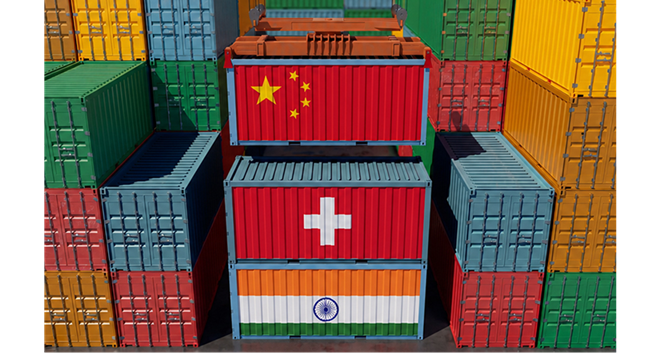
China And India: Two Textile Powerhouses
China
and India are among the world's most important textile manufacturing markets
and have been key destinations for Swiss textile machinery for decades.
However, their industrial structures, raw material bases and market dynamics
differ considerably. These differences create distinct requirements and
opportunities for Swiss suppliers of machinery, components and services. With
ITMA Asia + CITME in Shanghai and India ITME in Greater Noida, two major Asian
textile machinery exhibitions will take place towards the end of 2026.
China
and India have extensive textile manufacturing capacities, large domestic
markets and significant positions in international textile trade. Both
countries are important markets for the Swiss textile machinery industry. Many
Swiss companies have established a strong local presence through production
facilities, sales and service organisations, reflecting their long-term
commitment to these markets.
"China
and India are both key markets for our industry, but their industrial
environments differ notably," explains Cornelia Buchwalder, Secretary
General of Swiss Textile Machinery. "The structure of textile production,
the availability of raw materials and the importance of domestic demand all
influence their investment priorities. Understanding these differences is
essential for our member companies to offer technologies that meet the specific
requirements of each market."
China:
Technological advancement and strong competition
China
is by far the world's largest textile manufacturing country, with an extensive
and highly integrated value chain covering virtually every stage of textile
production. It is also the world's leading exporter of textiles and apparel,
while its substantial domestic market generates significant additional demand.
Its position in man-made fibres is particularly strong, with chemical fibre
production reaching approximately 87 million tonnes in 2025. At the same time,
China remains a major cotton producer and processor.
Exports
continue to play a central role in the Chinese textile industry. Chinese
textile machinery manufacturers have also made considerable technological
progress, creating an increasingly competitive environment for international
suppliers.
For
Swiss companies, opportunities lie particularly in advanced production
technologies, automation, digital connectivity, precise process control and
resource efficiency. As manufacturers seek to improve productivity and maintain
consistent quality, specialised solutions continue to play an important role.
India:
Traditional strengths and expanding opportunities
India's
textile industry has traditionally been closely linked to cotton. The country
is one of the world's largest cotton producers and has extensive spinning,
weaving and garment manufacturing capacities. At the same time, man-made
fibres, technical textiles and more advanced production and finishing processes
are gaining importance.
India's
growing domestic market is a significant driver of development. Rising incomes
and a young population support textile consumption, while government
initiatives aim to strengthen manufacturing capacities, modernise production
and increase textile exports.
These
developments create demand for machinery and technologies across the textile
value chain. Modernisation of existing facilities, investments in additional
production capacities, reliable quality control and more efficient use of
energy and water are among the priorities.
The
Trade and Economic Partnership Agreement between the EFTA states and India,
which entered into force in October 2025, provides further support by improving
the framework conditions for Swiss industrial suppliers.
Swiss
technology responding to different needs
Swiss
Textile Machinery member companies offer machinery, components and services covering
the entire textile value chain, from fibre preparation and spinning to weaving,
knitting, embroidery, finishing and quality control. They have contributed to
the development of both textile industries over many decades. Beyond supplying technology,
they have established local operations, provided technical expertise and
supported training and knowledge transfer.
"Our
industry has built long-standing relationships with textile manufacturers in
both countries," says Buchwalder. "Today, innovation is increasingly
driven by close cooperation with customers and a detailed understanding of
their production processes. Swiss companies combine engineering expertise with
specialised textile knowledge, enabling them to develop solutions that improve
efficiency, reliability and product quality."
Two
major exhibitions highlighting market importance
The
significance of both markets is reflected in the international exhibition
calendar. ITMA Asia + CITME will take place in Shanghai from 20 to 24 November
2026, followed shortly afterwards by India ITME in Greater Noida from 4 to 9
December. Around 20 Swiss Textile Machinery member companies will be exhibiting
at each event.
Despite
geopolitical uncertainties, trade barriers and cautious investment decisions,
the long-term outlook remains constructive. China and India will continue to
shape the development of the global textile industry, each with its own
priorities and challenges.
The
upcoming exhibitions will provide an opportunity for Swiss textile machinery
manufacturers to assess investment priorities, strengthen customer
relationships and gain further insights into developments in both
markets.
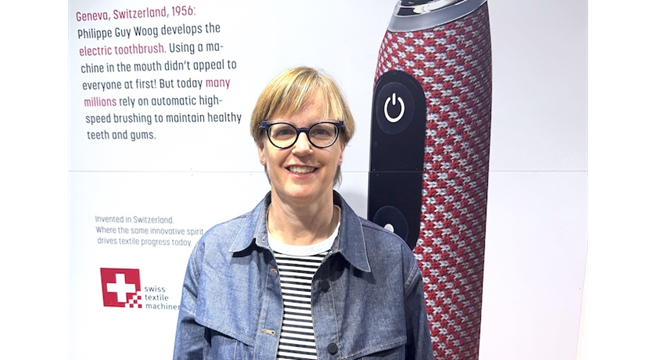
"China and India are both key markets for our industry, but their industrial environments differ notably," explains Cornelia Buchwalder, Secretary General of Swiss Textile Machinery. "The structure of textile production, the availability of raw materials and the importance of domestic demand all influence their investment priorities. Understanding these differences is essential for our member companies to offer technologies that meet the specific requirements of each market."
Subscribe To Textile Excellence Print Edition
If you wish to Subscribe to Textile Excellence Print Edition, kindly fill in the below form and we shall get back to you with details.
Newsletter
Subscribe To Textile Excellence Mailing List

- December 09, 2022
'There Is Very High Acceptance For India

- December 09, 2022
'Advanced Machines & Service, Customer C
- October 09, 2023
First-time In The World: Rieter’s Auto

- July 28, 2026
Arvind Eyes Leadership In India's Premiu

- June 01, 2020
Karl Mayer Enables Automated Production
- June 05, 2023
Ultimax - All New Revolutionary Rapier W

- June 09, 2025
DyStar Becomes A Wholly Owned Subsidiary

- July 28, 2026