
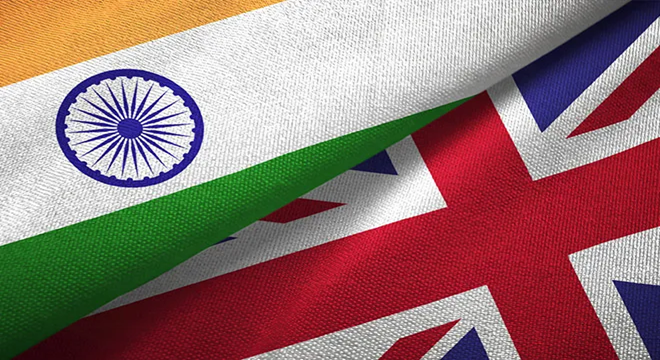
Indian Textiles & Apparel Gain Duty- Free Access To The UK
India-UK Trade Pact Takes Effect From July
15, Giving Indian Textiles Duty-Free Access
Indian textile and apparel exporters have duty-free
access to the UK from July 15, 2026, as the India-UK Comprehensive Economic and
Trade Agreement (CETA) comes into force. The agreement is expected to
significantly improve the competitiveness of Indian products in one of Europe's
largest consumer markets by eliminating UK import duties of up to 12% on
textiles and clothing. The UK is among the top 10 markets for Indian textiles
and clothing.
The trade pact, signed alongside the Double Contribution
Convention (DCC) on social security, is one of India's biggest bilateral
economic agreements in recent years. Besides boosting merchandise exports, it
is expected to expand opportunities for Indian service providers and reduce
employment costs for Indian professionals working temporarily in the UK.
Zero-duty access for almost all exports
Under CETA, around 99% of India's exports to the UK,
covering nearly 100% of bilateral trade value, will enjoy zero-duty access.
Apart from textiles and clothing, the agreement removes tariffs on a wide range
of products. UK duties of up to 70% on processed food products, 21.5% on marine
products, 18% on engineering goods and auto components, 16% on leather and
footwear, and 8% on chemicals and pharmaceutical products will also be
eliminated.
The removal of these tariffs is expected to make Indian
exports more competitive while creating new opportunities for manufacturers,
MSMEs, farmers, fishermen and workers.
Big opportunity for the textile sector
For India's textile and apparel industry, the agreement
provides an important competitive advantage in the UK market.
With import duties of up to 12% being eliminated, Indian
exporters are expected to improve their pricing against competing suppliers.
The agreement is also likely to encourage higher exports of garments, home
textiles, fabrics and other value-added textile products.
The textile sector, along with leather, engineering
goods, marine products and processed foods, is expected to be among the biggest
beneficiaries of the trade deal.
Major boost for services exports
The agreement goes well beyond trade in goods. The UK
has offered one of its most comprehensive market access commitments for
services, covering all major sectors and 137 sub-sectors of interest to India.
Indian companies operating in IT and IT-enabled
services, financial services, engineering, healthcare, education, professional
services, telecommunications and consultancy will benefit from greater market
access and improved regulatory certainty.
The agreement also provides easier mobility for business
visitors, intra-corporate transferees, contractual service suppliers,
independent professionals and investors.
In a first-of-its-kind provision, the UK will provide
dedicated annual mobility opportunities for 1,800 Indian chefs, yoga
instructors and classical musicians.
Social security agreement lowers costs
Coming into effect alongside CETA is the Double
Contribution Convention (DCC), which exempts Indian employees and employers
from making social security contributions in both India and the UK during
temporary overseas assignments.
The exemption period has been extended from three years
to five years, a significant improvement over the earlier arrangement.
More than 75,000 Indian professionals and over 900
Indian companies are expected to benefit from the agreement. Besides reducing
employment costs, it is expected to strengthen India-UK collaboration in
knowledge-intensive and service sectors.
Sensitive sectors remain protected
While opening the UK market for Indian exports, India
has safeguarded several sensitive agricultural sectors from increased imports.
Products such as dairy, cereals, millets, edible oils,
oilseeds, apples and several vegetable products have been kept outside the
tariff concession framework, protecting domestic farmers from import
competition.
Steel exporters receive relief
The two countries have also reached an understanding on
the UK's new steel measures, which came into effect from July 1, 2026.
According to the agreement, around 85% of India's steel
exports will remain outside the scope of the UK's steel measures. For the
remaining product categories, Indian exporters will continue to have access
through a combination of country-specific quotas, residual quotas and the
Authorised Use Scheme.
A modern trade agreement
Spread across 30 chapters, CETA is one of India's most
comprehensive trade agreements.
Besides tariff reductions, it covers digital trade,
telecommunications, financial services, intellectual property, government
procurement, innovation, sustainability, MSMEs and transparency. The agreement
is expected to strengthen supply chains, promote technology collaboration and
create a more predictable business environment for companies operating in both
countries.
Five years of negotiations
The agreement traces its origins to the India-UK
Enhanced Trade Partnership launched in 2021 and the India-UK Roadmap 2030,
which aims to double bilateral trade to US$100 billion by 2030.
Following 14 rounds of negotiations, CETA was concluded
in May 2025 and formally signed in London in July 2025. The Double Contribution
Convention was signed in February 2026, with both agreements now set to take
effect on July 15, 2026.
Commerce and Industry Minister Piyush Goyal said the
agreement removes long-standing tariff barriers and creates a level playing
field for Indian exporters. He said sectors such as textiles, leather, marine
products, engineering goods and processed foods would now be able to compete in
the UK market without tariff disadvantages, while the social security agreement
protects the financial interests of Indian professionals on temporary overseas
assignments.
Commerce and Industry Minister Piyush Goyal said the agreement removes long-standing tariff barriers and creates a level playing field for Indian exporters. He said sectors such as textiles, leather, marine products, engineering goods and processed foods would now be able to compete in the UK market without tariff disadvantages, while the social security agreement protects the financial interests of Indian professionals on temporary overseas assignments.
Subscribe To Textile Excellence Print Edition
If you wish to Subscribe to Textile Excellence Print Edition, kindly fill in the below form and we shall get back to you with details.
Newsletter
Subscribe To Textile Excellence Mailing List


- December 09, 2022
'There Is Very High Acceptance For India

- December 09, 2022
'Advanced Machines & Service, Customer C
- October 09, 2023
First-time In The World: Rieter’s Auto

- July 28, 2026
Arvind Eyes Leadership In India's Premiu

- June 01, 2020
Karl Mayer Enables Automated Production

- June 05, 2023
Ultimax - All New Revolutionary Rapier W
- June 09, 2025
DyStar Becomes A Wholly Owned Subsidiary

- July 28, 2026