
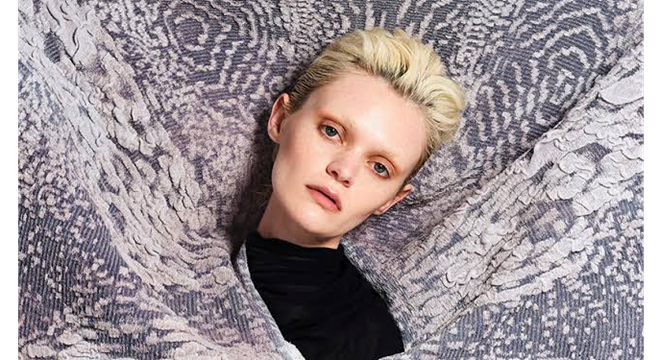
OXMAN Grows Textile Colour Using Bacteria Instead Of Synthetic Dyes
OXMAN is developing a new textile coloration method that
replaces synthetic dyes with living bacterial pigmentation, allowing color to
grow directly on fabric surfaces rather than being applied as a finishing
process.
The research, part of its Vigils project,
explores how pigmented bacteria can be cultivated on textiles so that color
emerges through biological activity integrated into the material itself.
Instead of treating dyeing as a separate industrial step, the studio reframes
it as a process of growth embedded in fabrication.
The approach draws from natural systems where color is
produced biologically—such as butterfly wings, flower petals, and animal
patterns—rather than chemically applied.
Shift from dyes to living systems
The work extends founder Neri Oxman’s broader design
philosophy, which positions biology as an active manufacturing partner. Earlier
research at MIT Media Lab, including projects like Silk Pavilion and Aguahoja,
explored how living organisms and biodegradable materials can participate in
fabrication processes.
OXMAN now describes this direction as Nature-Centric
Design, moving beyond biomimicry toward systems where biology directly
contributes to material creation.
Textile industry impact
The project targets one of fashion’s most polluting
stages: dyeing and finishing. The textile sector consumes an estimated 93
billion cubic meters of water annually and generates around 20% of global
industrial wastewater, much of it linked to synthetic, petrochemical-based
dyes.
By using bacterial pigmentation, OXMAN aims to reduce
dependence on chemical dyeing processes and reimagine colour as part of a
material’s lifecycle rather than an external treatment.
From experiment to manufacturing model
The research connects to OXMAN’s wider experimental
platform O°, which integrates robotic fabrication, biodegradable
polymers, and microbial systems to create materials designed to grow, function,
and eventually decompose within a single ecological cycle.
Projects like Vespers III previously demonstrated
bacteria-generated pigmentation in 3D-printed structures. Vigils extends
this approach to textiles, testing whether living organisms can directly color
fabric at scale.
A shift in how materials are made
Across its work, OXMAN is exploring a shift from
industrial assembly to biological growth systems, using organisms such as
bacteria, silkworms, and engineered microbes as active participants in
production.
The studio’s latest textile research signals a broader
ambition: to replace conventional dyeing and manufacturing with systems where
materials are grown, not processed, and where color becomes a function of
biology rather than chemistry.
The research connects to OXMAN’s wider experimental platform O°, which integrates robotic fabrication, biodegradable polymers, and microbial systems to create materials designed to grow, function, and eventually decompose within a single ecological cycle. Projects like Vespers III previously demonstrated bacteria-generated pigmentation in 3D-printed structures. Vigils extends this approach to textiles, testing whether living organisms can directly color fabric at scale.
Subscribe To Textile Excellence Print Edition
If you wish to Subscribe to Textile Excellence Print Edition, kindly fill in the below form and we shall get back to you with details.
Newsletter
Subscribe To Textile Excellence Mailing List


- December 09, 2022
'There Is Very High Acceptance For India

- December 09, 2022
'Advanced Machines & Service, Customer C
- October 09, 2023
First-time In The World: Rieter’s Auto

- July 28, 2026
Arvind Eyes Leadership In India's Premiu

- June 01, 2020
Karl Mayer Enables Automated Production
- June 05, 2023
Ultimax - All New Revolutionary Rapier W

- June 09, 2025
DyStar Becomes A Wholly Owned Subsidiary

- July 28, 2026