
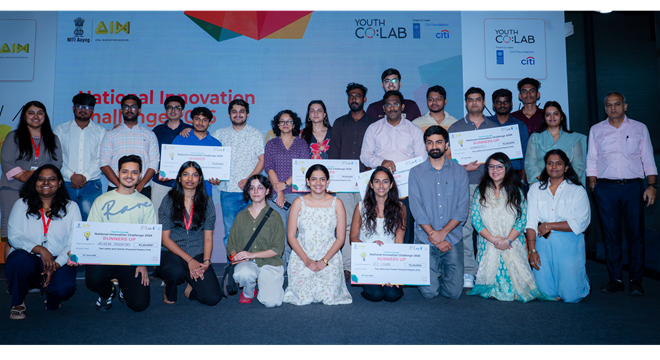
Young Innovators Take Centre Stage At Sustainable Textile Challenge 2026
Six youth-led startups have been recognised as winners
of the Youth Co National Innovation Challenge 2026, with a strong emphasis on
sustainable textiles, circular economy solutions, and food systems innovation.
The winning ideas reflect a growing shift in India’s startup ecosystem towards
cleaner production models, especially in textiles and fashion.
The programme is co-led by UNDP India and the Citi
Foundation, in partnership with the Atal Innovation Mission (NITI Aayog) and
implemented by T-Hub Foundation, Hyderabad.
350+ startups, 28 states, one focus on sustainability
This year’s challenge received over 350 applications from 28 states, covering three key areas:
-Sustainable textiles and fashion
-Circular economy innovations
-Sustainable food and water systems.
From this pool, 50 startups were shortlisted for a
three-month incubation programme, followed by mentoring, investor sessions, and
a final national pitch event in Hyderabad.
Winners spotlight circular economy and
textile innovation
After multiple rounds of evaluation, six startups were
selected as winners and runners-up for scalable solutions.
The winners include NavaPrayoga Labs (Grassip),
UnBubble, and Ecorenowa Solutions, while Eco Cushion, Vasudeva Innovations, and
WomenasticCO were named runners-up.
Several of the selected ventures focus directly on:
-textile
recycling and upcycling
-waste-to-value
circular models
-sustainable
materials for fashion and packaging
-resource-efficient
production systems
Each winning startup received seed funding of up to ₹3.5
lakh, while runners-up received ₹2.2 lakh, along with mentorship and ecosystem
support.
Textile sustainability becomes a growing
innovation theme
A significant share of participating startups worked on
sustainable textiles and fashion, highlighting rising interest in:
-reducing
textile waste
-building
circular supply chains
-developing
eco-friendly alternatives to conventional fabrics
-improving
resource efficiency in production
Industry observers say this reflects a broader shift
where textile innovation is increasingly linked with sustainability and climate
goals rather than just production scale.
Strong participation from young and diverse
founders
Officials noted that the programme is helping widen
access to innovation beyond major metro cities. More than 40% of selected
startups were led by women founders, with participation also growing from
Tier-2 and Tier-3 regions.
UNDP India said youth-led innovation is becoming central
to India’s climate and development goals, while AIM highlighted that platforms
like this help address gaps in funding, mentorship, and opportunity
distribution.
What this means for the textile industry
The challenge highlights a clear trend: sustainable
textiles are moving from concept to startup-level execution in India.
For the textile industry, this signals:
-rising
innovation in recycling and circular textile systems
-early-stage
solutions for waste reduction and material recovery
-a
growing ecosystem of startups focused on green fashion supply chains
-long-term
alignment with global sustainability requirements in exports
Officials noted that the programme is helping widen access to innovation beyond major metro cities. More than 40% of selected startups were led by women founders, with participation also growing from Tier-2 and Tier-3 regions. UNDP India said youth-led innovation is becoming central to India’s climate and development goals, while AIM highlighted that platforms like this help address gaps in funding, mentorship, and opportunity distribution.
Subscribe To Textile Excellence Print Edition
If you wish to Subscribe to Textile Excellence Print Edition, kindly fill in the below form and we shall get back to you with details.
Newsletter
Subscribe To Textile Excellence Mailing List

- December 09, 2022
'There Is Very High Acceptance For India

- December 09, 2022
'Advanced Machines & Service, Customer C
- October 09, 2023
First-time In The World: Rieter’s Auto
- July 28, 2026
Arvind Eyes Leadership In India's Premiu

- June 01, 2020
Karl Mayer Enables Automated Production
- June 05, 2023
Ultimax - All New Revolutionary Rapier W
- June 09, 2025
DyStar Becomes A Wholly Owned Subsidiary
- July 28, 2026