
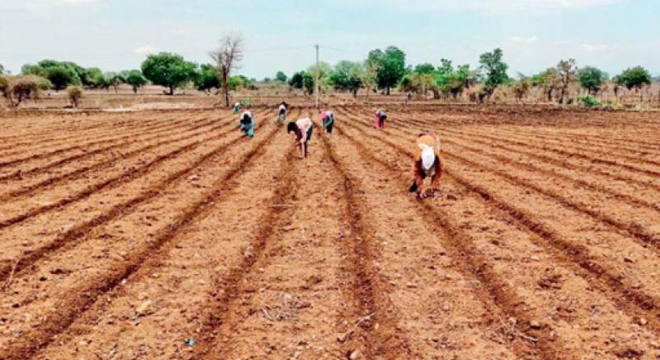
Cotton Sowing Deficit Slashes To 9% As Farmers Race To Plant
India's
cotton crop has staged a dramatic comeback.
Just
weeks after a delayed monsoon pushed cotton sowing 25-30% behind last year, the
gap has narrowed sharply to just 9%, triggering optimism that the country could
still achieve its ambitious 125-130 lakh hectare target this season.
Good
monsoon rains across Central and South India have sent farmers back to their
fields, while a combination of higher MSP, strong market prices and better
profitability is drawing acreage away from soybean, maize, sugarcane and
groundnut.
According
to the latest Agriculture Ministry data, cotton sowing had reached 66 lakh
hectares by July 9, up sharply from barely 30 lakh hectares just days earlier.
Industry believes the momentum is only getting stronger.
Industry
veteran Atul Ganatra expects cotton acreage to cross 100 lakh hectares by July
25, putting the government's target firmly within sight. Although the sowing
window has been extended until 15 August because of the delayed monsoon, most
planting is expected to be completed by the end of July.
The
recovery is also reflected in official assessments. Agriculture Commissioner P.
K. Singh says improved rainfall in key producing states, particularly
Maharashtra, has accelerated sowing after a sluggish start.
Cotton
wins the acreage battle
The
biggest driver is no longer the weather, it's profitability.
The
Government has increased cotton's MSP to around ₹8,700 per quintal, nearly 7%
higher than last year. Farmers also realised market prices close to ₹10,000 per
quintal during the previous season, making cotton one of the most attractive
Kharif crops.
The
result is a visible shift in cropping patterns.
Across
Maharashtra, growers are replacing sugarcane, maize and soybean with cotton. In
Gujarat, delayed rains have pushed thousands of farmers to abandon groundnut in
favour of cotton. Reports from Khandesh indicate cotton sowing is already
20-25% higher than last year, while farmers who suffered poor soybean
germination are replanting their fields with cotton.
South
India powers ahead
South
India has emerged as the surprise growth engine this season.
Industry
estimates indicate cotton sowing in the region is already 20% ahead of last
year. Since Central and South India together account for nearly 100 lakh
hectares of cotton cultivation, their strong performance could determine the
size of India's final crop.
Telangana
is reinforcing the trend.
Despite
weak overall Kharif sowing, farmers continue to favour cotton over pulses and
other rainfed crops because of stronger returns, abundant seed availability and
better drought tolerance. The state is targeting 52 lakh acres under cotton
this season.
Big
relief for textile industry
For
India's textile industry, the recovery couldn't have come at a better time.
Last
season's lower cotton production tightened raw material supplies and kept fibre
prices under pressure. A larger crop this year would improve cotton
availability for spinning mills, stabilise fibre supplies and support the
entire textile value chain.
If
the monsoon remains supportive through July and August, India's cotton story
could change dramatically. What looked like a weak crop only weeks ago is now
shaping up to be one of the strongest sowing recoveries in recent years - a
development that could ease raw material concerns across the textile industry.
Last season's lower cotton production tightened raw material supplies and kept fibre prices under pressure. A larger crop this year would improve cotton availability for spinning mills, stabilise fibre supplies and support the entire textile value chain. If the monsoon remains supportive through July and August, India's cotton story could change dramatically. What looked like a weak crop only weeks ago is now shaping up to be one of the strongest sowing recoveries in recent years - a development that could ease raw material concerns across the textile industry.
Subscribe To Textile Excellence Print Edition
If you wish to Subscribe to Textile Excellence Print Edition, kindly fill in the below form and we shall get back to you with details.
Newsletter
Subscribe To Textile Excellence Mailing List


- December 09, 2022
'There Is Very High Acceptance For India

- December 09, 2022
'Advanced Machines & Service, Customer C
- October 09, 2023
First-time In The World: Rieter’s Auto

- July 28, 2026
Arvind Eyes Leadership In India's Premiu

- June 01, 2020
Karl Mayer Enables Automated Production

- June 05, 2023
Ultimax - All New Revolutionary Rapier W

- June 09, 2025
DyStar Becomes A Wholly Owned Subsidiary

- July 28, 2026