
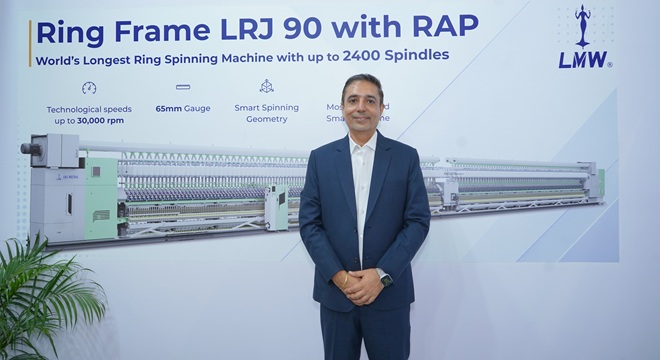
LMW Sees Technology And Market Diversification As Keys To India's Textile Growth
India's textile machinery sector must prepare for a rapidly
changing global trade landscape by focusing on technology, market
diversification and long term competitiveness, according to Vivek Arora,
General Manager, Marketing and Sales, Textile Machinery Division, Lakshmi
Machine Works Ltd. Speaking to Textile Excellence during Bharat Tex 2026
at Bharat Mandapam, New Delhi, Arora said the United States will continue to
remain a critical export destination for Indian textiles despite recent tariff
challenges and global geopolitical uncertainties. He observed that many leading
exporters are choosing to absorb higher costs rather than lose their presence
in one of the world's largest consumer markets, underlining the strategic
importance of maintaining long term relationships with global buyers.
Arora noted that recently concluded Free Trade Agreements
will gradually open new opportunities in alternative markets, although
developing comparable business volumes will require sustained investments and
time. Large integrated exporters have already begun expanding their presence in
new geographies, while smaller apparel manufacturers and exporters will require
additional support to adapt to evolving global trade dynamics.
Highlighting emerging opportunities within India, Arora
emphasised the importance of developing textile manufacturing clusters in the
Northeast. He pointed to growing prospects for acrylic spinning in the region,
supported by favourable government policies and proximity to Bangladesh and
Myanmar. According to him, improved connectivity and regional infrastructure
could transform the Northeast into a competitive manufacturing hub serving both
domestic and neighbouring international markets.
Arora stressed that investments in modern spinning
infrastructure must be planned with a long-term perspective, ensuring
commercial sustainability and operational efficiency over several decades. He
added that Bharat Tex 2026 has emerged as an important platform connecting
machinery manufacturers, textile producers, policymakers and technology
providers, enabling meaningful discussions that will shape the future of
India's textile manufacturing ecosystem. According to him, continuous
technology adoption and strategic investments will be essential for
strengthening India's global competitiveness across the textile value chain.
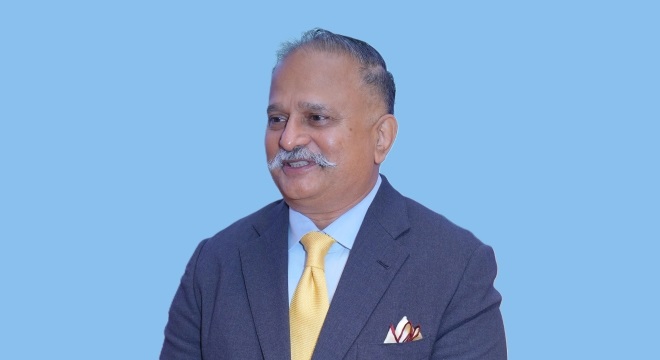
ivek Arora, General Manager, Marketing and Sales, Textile Machinery Division, Lakshmi Machine Works Ltd. emphasised the importance of developing textile manufacturing clusters in the Northeast. He pointed to growing prospects for acrylic spinning in the region, supported by favourable government policies and proximity to Bangladesh and Myanmar. According to him, improved connectivity and regional infrastructure could transform the Northeast into a competitive manufacturing hub serving both domestic and neighbouring international markets.
Subscribe To Textile Excellence Print Edition
If you wish to Subscribe to Textile Excellence Print Edition, kindly fill in the below form and we shall get back to you with details.
Newsletter
Subscribe To Textile Excellence Mailing List

- December 09, 2022
'There Is Very High Acceptance For India

- December 09, 2022
'Advanced Machines & Service, Customer C
- October 09, 2023
First-time In The World: Rieter’s Auto
- July 28, 2026
Arvind Eyes Leadership In India's Premiu

- June 01, 2020
Karl Mayer Enables Automated Production
- June 05, 2023
Ultimax - All New Revolutionary Rapier W
- June 09, 2025
DyStar Becomes A Wholly Owned Subsidiary
- July 28, 2026