
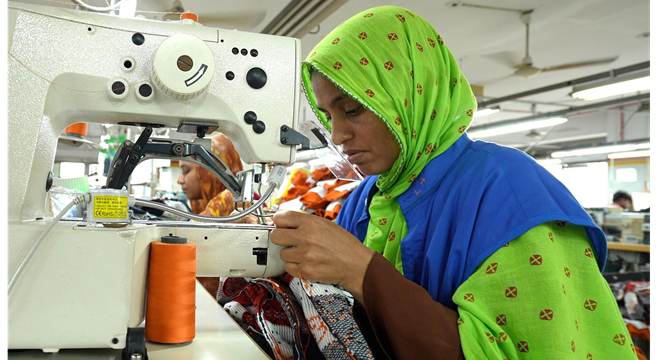
Bangladesh Clears Import Hurdles For Specialised Apparel
Bangladesh
wants to make it easier for garment exporters to move into products that
require fabrics and materials its domestic supply chain cannot always provide.
The
government has amended the Import Policy Order 2026-2029, immediately easing
several import requirements for specialised fabrics and materials used in
products such as seamless sportswear, underwear and functional garments. The
changes took effect following a Commerce Ministry notification issued on
September 20.
Under
the revised rules, exporters can import specialised fabrics and materials with
recommendations from either the Bangladesh Garment Manufacturers and Exporters
Association (BGMEA) or the Bangladesh Knitwear Manufacturers and Exporters
Association (BKMEA).
Bangladesh's
apparel industry has long been built around large volumes of relatively
standard products. But specialised apparel - performance sportswear, functional
clothing, intimate wear and other higher-value products - often requires
fabrics and inputs that are not widely available locally.
One
less approval to chase
The
government has also removed a separate approval requirement that applied in
certain cases to imported knit fabrics and yarn.
Previously,
importers could have needed Commerce Ministry approval even when the imports
were already covered by the country's import policy and the Utilisation
Declaration (UD) system.
BKMEA
President Mohammad Hatem said the requirement could have forced companies to
seek ministry approval for individual letters of credit, adding another layer
of paperwork.
That
requirement has now gone.
Hatem
said the changes largely correct inconsistencies and unnecessary restrictions
in the existing policy and should reduce disruptions for exporters.
A
broken machine gets a little more breathing room
There
is another change that could matter on the factory floor.
Bangladesh
has removed limits on imports of spare parts for industrial machinery.
Previously,
spare part imports were capped at 2% of the value of machinery in the first
year and 5% in subsequent years.
That
could create a bizarre situation: a critical machine breaks down, but the
replacement part costs more than the permitted import value.
The
restriction has now been removed.
For
factories running expensive knitting, weaving, dyeing, finishing or garment
machinery, that could mean less risk of production being held up by an
import-value ceiling.
Not
a duty cut
There
is an important distinction.
The
amendment does not offer a blanket duty concession or set a new quantitative
limit for specialised fabrics and materials. Instead, it changes the conditions
and procedures under which these inputs can be imported.
So,
this is primarily a trade-facilitation move, not a new tariff incentive.
The
timing is significant.
Bangladesh
is under pressure to move further into higher-value apparel while dealing with
rising competition and changing sourcing requirements. At the same time, its
garment industry has been facing substantial disruption: a recent BKMEA survey
found that nearly 55% of knitwear factories had experienced order cancellations
or reductions between August 21 and September 14.
Against
that backdrop, making specialised inputs easier to source could give
manufacturers more flexibility to chase product categories beyond conventional
basics.
Bangladesh is under pressure to move further into higher-value apparel while dealing with rising competition and changing sourcing requirements. At the same time, its garment industry has been facing substantial disruption: a recent BKMEA survey found that nearly 55% of knitwear factories had experienced order cancellations or reductions between August 21 and September 14. Against that backdrop, making specialised inputs easier to source could give manufacturers more flexibility to chase product categories beyond conventional basics.
Subscribe To Textile Excellence Print Edition
If you wish to Subscribe to Textile Excellence Print Edition, kindly fill in the below form and we shall get back to you with details.
Newsletter
Subscribe To Textile Excellence Mailing List


- December 09, 2022
'There Is Very High Acceptance For India

- December 09, 2022
'Advanced Machines & Service, Customer C
- October 09, 2023
First-time In The World: Rieter’s Auto

- July 28, 2026
Arvind Eyes Leadership In India's Premiu

- June 01, 2020
Karl Mayer Enables Automated Production
- June 05, 2023
Ultimax - All New Revolutionary Rapier W
- June 09, 2025
DyStar Becomes A Wholly Owned Subsidiary

- July 28, 2026