
Cotton MSP Gets A Sharp Lift As War Jitters Push Cotton Market Into Overdrive
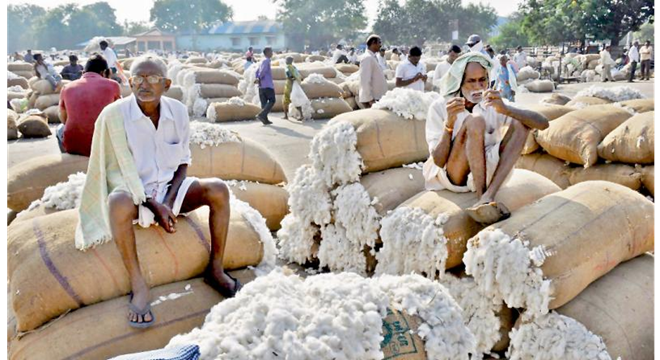
India’s cotton market is suddenly moving at two speeds. On one side, the government has raised the minimum support price (MSP) for cotton for the 2026-27 Kharif season. On the other, global markets are reacting sharply to the ongoing Iran conflict, sending cotton and yarn prices higher across supply chains. The result is a market filled with uncertainty, opportunity and anxiety all at once. The government has increased the MSP for medium staple cotton from Rs 7710 per quintal to Rs 8267 per quintal. And MSP for long staple cotton has gone up from Rs 8110 to Rs 8667 per quintal. But the MSP increase comes at a time when market prices have already turned highly volatile due to geopolitical tensions, especially the ongoing Iran conflict and disruptions in global trade routes. Cotton crosses Rs 10,000 per quintal In some cotton markets, cotton prices have surged to nearly Rs 10,000 per quintal in recent days. Traders say rising global prices of cotton bales, cottonseed and cottonseed oil triggered the spike. Cotton bale prices have climbed to around Rs 70,000 from Rs 55,000 earlier. Cottonseed prices increased to Rs 4,500 per quintal from Rs 4,000. However, the sudden rally has come too late for most farmers. Nearly 98% of farmers in the region had already sold their produce earlier at around Rs 7,000 per quintal, either to the Cotton Corporation of India (CCI) or private traders. Only a small section of farmers who stored their cotton have been able to benefit from the price jump. China’s cotton imports rise 62% China’s cotton imports have surged dramatically this year as textile mills there rush to secure cheaper raw material amid supply disruptions and rising domestic prices. According to Chinese customs data, China imported about 1.8 million tonnes of cotton in March 2026 alone, up 138% cent year-on-year. Cumulative imports for January-March reached 5.5 million tonnes, a jump of 62% over the same period last year. The Chinese government also issued a 300,000-tonne cotton import quota under a sliding-scale tariff mechanism. The quota was increased by 100,000 tonnes compared to 2025 and released five months earlier than usual to ease pressure on textile mills facing high raw material costs. Chinese mills are increasingly preferring imported cotton because domestic prices remain elevated. The gap between Chinese domestic and international cotton prices reportedly widened to nearly 3,000 RMB per tonne in early March. Brazil has emerged as China’s largest cotton supplier, accounting for 60% of imports in March. Australian cotton held an 11% share, while US cotton accounted for 8%.Analysts say concerns over lower cotton acreage in Xinjiang, coupled with expanding textile capacity in China, are strengthening expectations of tighter supply in the coming months. China’s benchmark 3128B cotton spot price reportedly touched 16,725 RMB per tonne in April, the highest level in nearly two years. Gujarat mills gain from global disruption Meanwhile, China is buying higher quantities of cotton yarn from India, at a time when India’s spinning mills are facing uncertainty. As the Iran conflict disrupted trade routes and delayed shipments from countries like the US and Brazil, Chinese buyers increasingly turned to India for cotton yarn supplies. According to industry estimates, monthly shipments of cotton yarn from India to China have jumped to nearly 1,500 containers carrying around 30,000 tonnes since November, compared to an earlier average of just 300 containers. A weaker rupee has further boosted competitiveness. The Indian currency has weakened about seven per cent against the Chinese yuan this year, making Indian yarn cheaper for Chinese buyers. Industry officials say Gujarat mills enjoy an advantage because they are located close to cotton-growing regions as well as ports. In contrast, spinning mills in Tamil Nadu face higher transportation costs since raw cotton must be sourced from western and central India. Another major factor supporting cotton demand is the sharp rise in polyester costs. Indian polyester manufacturers have reported raw material cost increases of nearly 30%. Higher polyester costs are indirectly improving cotton’s competitiveness in the global fibre market. Yarn prices rise, but mills under pressure While cotton prices are rising, textile mills are facing mounting cost pressure. In China, cotton yarn prices have surged due to expensive raw material and supply concerns. Prices for 21S cotton ring-spun yarn in Shandong reportedly rose to around 23,200 RMB per tonne in early May, while 32S yarn prices reached 24,600 RMB per tonne. But downstream demand remains uneven. Textile mills are entering the traditional off-season, and buyers are increasingly resisting higher yarn prices. Operating rates at spinning mills have softened, while inventory levels are rising. Industry data showed cotton yarn mill operating rates at around 69.82% as of May 7, while finished yarn inventory increased to over 30 days. Analysts say the market now faces a delicate balance. Cotton prices remain elevated due to supply fears and strong Chinese demand, but downstream textile consumption is slowing.
A weaker rupee has further boosted competitiveness. The Indian currency has weakened about seven per cent against the Chinese yuan this year, making Indian yarn cheaper for Chinese buyers. Industry officials say Gujarat mills enjoy an advantage because they are located close to cotton-growing regions as well as ports. In contrast, spinning mills in Tamil Nadu face higher transportation costs since raw cotton must be sourced from western and central India. Another major factor supporting cotton demand is the sharp rise in polyester costs. Indian polyester manufacturers have reported raw material cost increases of nearly 30%. Higher polyester costs are indirectly improving cotton’s competitiveness in the global fibre market.
Subscribe To Textile Excellence Print Edition
If you wish to Subscribe to Textile Excellence Print Edition, kindly fill in the below form and we shall get back to you with details.
Newsletter
Subscribe To Textile Excellence Mailing List


- December 09, 2022
'There Is Very High Acceptance For India

- December 09, 2022
'Advanced Machines & Service, Customer C
- October 09, 2023
First-time In The World: Rieter’s Auto

- July 28, 2026
Arvind Eyes Leadership In India's Premiu

- June 01, 2020
Karl Mayer Enables Automated Production

- June 05, 2023
Ultimax - All New Revolutionary Rapier W

- June 09, 2025
DyStar Becomes A Wholly Owned Subsidiary

- July 28, 2026