
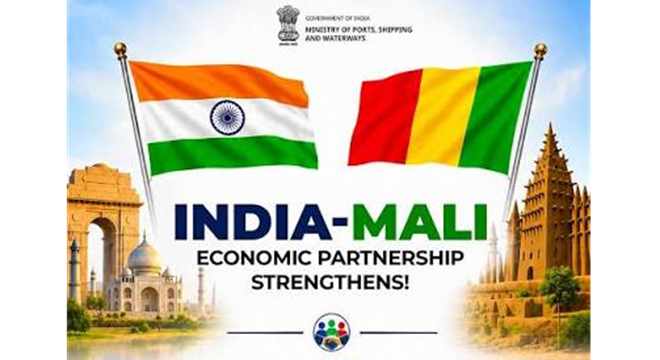
India-Mali Textile Partnership Gains Momentum As Trade Surges 55%
India and Mali are moving
to deepen cooperation in cotton, textiles and manufacturing as both countries
look to convert growing trade ties into long-term investment partnerships.
The inaugural India–Mali
Forum for the Promotion of Exports, held in Bamako, has opened new
opportunities for collaboration across cotton, textiles, mining, energy,
pharmaceuticals and infrastructure.
Bilateral trade between
India and Mali crossed US$326.61 million in FY 2025–26, registering a strong
55% growth over the previous year. The forum brought together senior government
officials and around 30 Indian business leaders to explore commercial opportunities
through B2B, B2G and government-level engagements.
Cotton value chain emerges
as key opportunity
For the textile industry,
Mali’s biggest strength is its position as one of Africa’s leading cotton
producers. The country produces around 600,000–700,000 tonnes of cotton lint
annually in strong crop years, making cotton a critical pillar of its economy
and exports.
However, Mali’s textile
industry remains largely underdeveloped, with much of its cotton exported as
raw material. The country is looking to expand domestic value addition through
spinning, weaving, processing and garment manufacturing.
This creates opportunities
for Indian companies with expertise across the textile value chain from cotton
processing and spinning to textile machinery, fabrics, apparel manufacturing
and sustainable production technologies.
Import-dependent textile
market offers scope
Mali’s textile and apparel
market is estimated at around US$200–300 million annually, with significant
dependence on imports for finished garments, fabrics, synthetic textiles and
home textiles.
China remains the dominant
supplier of textile and apparel products to Mali, particularly in low-cost
garments and fabrics. Other suppliers include India, Pakistan, Turkey and
UAE-based trading hubs.
India already has a
presence in the market, exporting products such as cotton fabrics,
pharmaceuticals, vehicles and bicycles. A stronger partnership could help
Indian textile companies expand exports of fabrics, garments, home textiles and
machinery while supporting Mali’s move towards local manufacturing.
Building a textile
manufacturing ecosystem
During the forum, both
sides identified cotton and textiles as priority sectors for cooperation, along
with mining, renewable energy, agro-industry and healthcare.
Business discussions
focused on converting opportunities into commercial partnerships and
Memorandums of Understanding, with participation from sectors including
textiles, renewable energy, pharmaceuticals, automotive manufacturing and
mining.
Mali has announced an
Investment Forum on 3–4 December 2026, where additional investment
opportunities will be presented to global investors.
For India’s textile sector,
the growing partnership offers a strategic opportunity: helping Mali move from
a raw cotton exporter to a value-added textile producer while opening a new
market for Indian technology, machinery, fabrics and manufacturing expertise.
Mali has announced an Investment Forum on 3–4 December 2026, where additional investment opportunities will be presented to global investors. For India’s textile sector, the growing partnership offers a strategic opportunity: helping Mali move from a raw cotton exporter to a value-added textile producer while opening a new market for Indian technology, machinery, fabrics and manufacturing expertise.
Subscribe To Textile Excellence Print Edition
If you wish to Subscribe to Textile Excellence Print Edition, kindly fill in the below form and we shall get back to you with details.
Newsletter
Subscribe To Textile Excellence Mailing List

- December 09, 2022
'There Is Very High Acceptance For India

- December 09, 2022
'Advanced Machines & Service, Customer C
- October 09, 2023
First-time In The World: Rieter’s Auto
- July 28, 2026
Arvind Eyes Leadership In India's Premiu

- June 01, 2020
Karl Mayer Enables Automated Production
- June 05, 2023
Ultimax - All New Revolutionary Rapier W
- June 09, 2025
DyStar Becomes A Wholly Owned Subsidiary

- July 28, 2026