
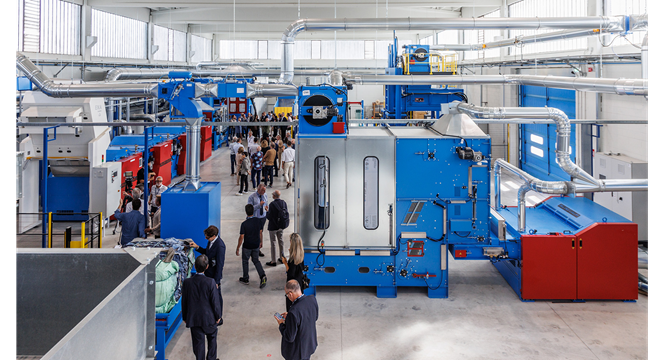
Italy Opens Integrated Textile Recycling Plant With 19,200-Tonne Annual Capacity
STADLER
has designed an automated sorting line for IGERS, combining near-infrared
technology, fibre separation and digital traceability to prepare textile waste
for high-quality recycling.
Italy
has opened a new textile recycling facility designed to process up to 19,200
tonnes of waste annually, marking a step towards industrial-scale textile
circularity.
Located
in San Pietro Mosezzo, in the Novara province of Piedmont, the plant was opened
in September 2026 by IGERS s.r.l. STADLER Group designed and supplied the
sorting line and key treatment equipment, integrating the system into an
existing building.
With
a processing capacity of four tonnes per hour, the facility is designed to
handle post-consumer and post-industrial textile waste, producing high-quality
flakes and frayed material suitable for the spinning industry. It is described
as Italy's first facility to integrate all treatment phases of textile
recycling, with traceability throughout the process.
The
project comes as Europe's separate textile collection requirements and Extended
Producer Responsibility (EPR) frameworks increase the need for industrial
infrastructure to sort and recover discarded textiles.
Patented
process combines sorting and regeneration
Textile
waste presents a complex challenge: it contains different fibre types, blends,
accessories and contaminants, requiring precise separation before recycling.
IGERS
has developed an Italian-patented process covering the entire sequence, from
initial buffering and sanitisation to sorting, tearing and final output. The
system integrates impurity removal, technology-based material identification,
mechanical regeneration and digital traceability to direct each material stream
towards the most appropriate destination.
STADLER
worked with IGERS from process development and equipment selection through to
plant layout and system integration. Trials at STADLER's test centre in
Germany, alongside testing by IGERS, helped establish suitable configurations
for handling textiles, which can fold, overlap and become entangled during
processing.
Two-stage
NIR sorting improves fibre separation
The
automated sorting line comprises two dosing units, two TOMRA near-infrared
(NIR) optical sorters and 16 conveyors.
In
the first sorting stage, the system separates pure textile fractions, such as
100% cotton or wool, from blended materials and impurities. The higher-value
pure fractions are stored in a buffer, while the second sorter removes
contaminants and non-conforming materials, including hanger pieces and leather.
The
buffered material is subsequently recirculated through the same sorting
equipment, configured to separate it by fibre type. This approach improves
material purity and prepares more consistent feedstock for downstream
recycling.
Flexibility
is built into the system. Depending on the material and sorting strategy,
output fractions can be directed to a baler, storage containers, a
recirculation buffer or the fibre-opening process. The plant can therefore
accommodate different incoming textile streams and changing operational
requirements.
The
line is fully automated and requires one plant manager to start and stop
operations and adjust the NIR sorters' settings.
Building
capacity for textile circularity
For
IGERS, the facility establishes an industrial base for expanding textile
recycling. The company plans to develop additional recycling hubs in line with
material availability, regional needs and demand for recovered fibres.
For
STADLER, the project demonstrates the importance of integrating sorting
technology, material handling and downstream processing rather than treating
textile separation as a standalone operation.
The
commercial challenge extends beyond processing capacity. Recycling depends on
consistently delivering material of the right fibre composition and quality to
downstream users. Reliable sorting, traceability and adaptable plant design
will be critical as Europe builds the infrastructure needed to recover more textile
waste.
For STADLER, the project demonstrates the importance of integrating sorting technology, material handling and downstream processing rather than treating textile separation as a standalone operation. The commercial challenge extends beyond processing capacity. Recycling depends on consistently delivering material of the right fibre composition and quality to downstream users. Reliable sorting, traceability and adaptable plant design will be critical as Europe builds the infrastructure needed to recover more textile waste.
Subscribe To Textile Excellence Print Edition
If you wish to Subscribe to Textile Excellence Print Edition, kindly fill in the below form and we shall get back to you with details.
Newsletter
Subscribe To Textile Excellence Mailing List

- December 09, 2022
'There Is Very High Acceptance For India

- December 09, 2022
'Advanced Machines & Service, Customer C
- October 09, 2023
First-time In The World: Rieter’s Auto

- July 28, 2026
Arvind Eyes Leadership In India's Premiu

- June 01, 2020
Karl Mayer Enables Automated Production
- June 05, 2023
Ultimax - All New Revolutionary Rapier W
- June 09, 2025
DyStar Becomes A Wholly Owned Subsidiary

- July 28, 2026